


Overview
A professional decision operating system for serious choices. About SpiceLogic Rational Will →
Welcome, and thanks for trying Rational Will.
Rational Will is a modern, easy to use program that helps you think a decision through and make a good one. Instead of going with your gut and hoping it works out, you lay out your options, weigh what matters to you, and let the software do the math. Say you are picking between two job offers. You list each one, you list what you care about (pay, commute, the work itself, room to grow), and the program shows you which offer fits you best. This overview explains the idea behind the tool and shows you what is inside.

What makes a decision good, or bad?
Before we talk about the software, one thing is worth getting straight: what actually makes a decision good or bad? The answer is not as obvious as it sounds. Once you see it clearly, it changes the way you make every choice from here on.

In real life, most people judge a decision by how it turned out. That is a mistake, and it can lead you badly astray. Here is a simple example that shows why.
Think about Russian roulette. The player puts a single round in a revolver, spins the cylinder, holds the muzzle to his own head, and pulls the trigger. Say you win a million dollars if the chamber is empty. Your chance of surviving is 5 out of 6. Would you play? If you care about your life, the answer is a clear no.
The reason is simple. If you lose, the loss is your life, and no prize makes up for that. And if you win, you only won because you got lucky. Win once, win ten times, it does not matter. The choice to play was a bad choice every single time, no matter how it turned out. A good result from a reckless bet is just luck. It is not a good decision.
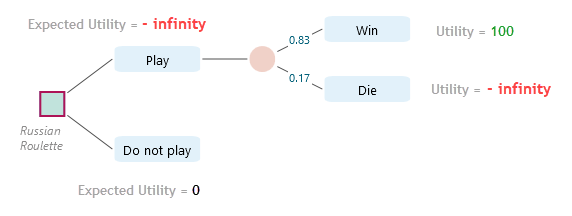
So the thing that really matters is how you make the decision, not how it happens to turn out. In the book Winning Decisions: Getting It Right the First Time, the authors give a name to a good result that came from a poor decision process. They call it luck. A sound process is the part you can actually control, and it is the part you should be judged by.
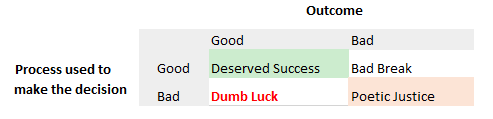
Nobody can promise how an uncertain event will turn out. What a sound, clear-headed process can do is give you the best possible shot at a good result, and it gives you solid reasoning to fall back on. So if things still go wrong, you can look back and know you made the right call with what you knew at the time. No regrets.
The modeling tools inside Rational Will
When you open Rational Will, the first screen lets you pick the decision modeling tool you want to work with. Each tool fits a different kind of problem, so you start by choosing the one that matches the decision in front of you. If you are not sure yet, that is fine. The notes below help you pick.
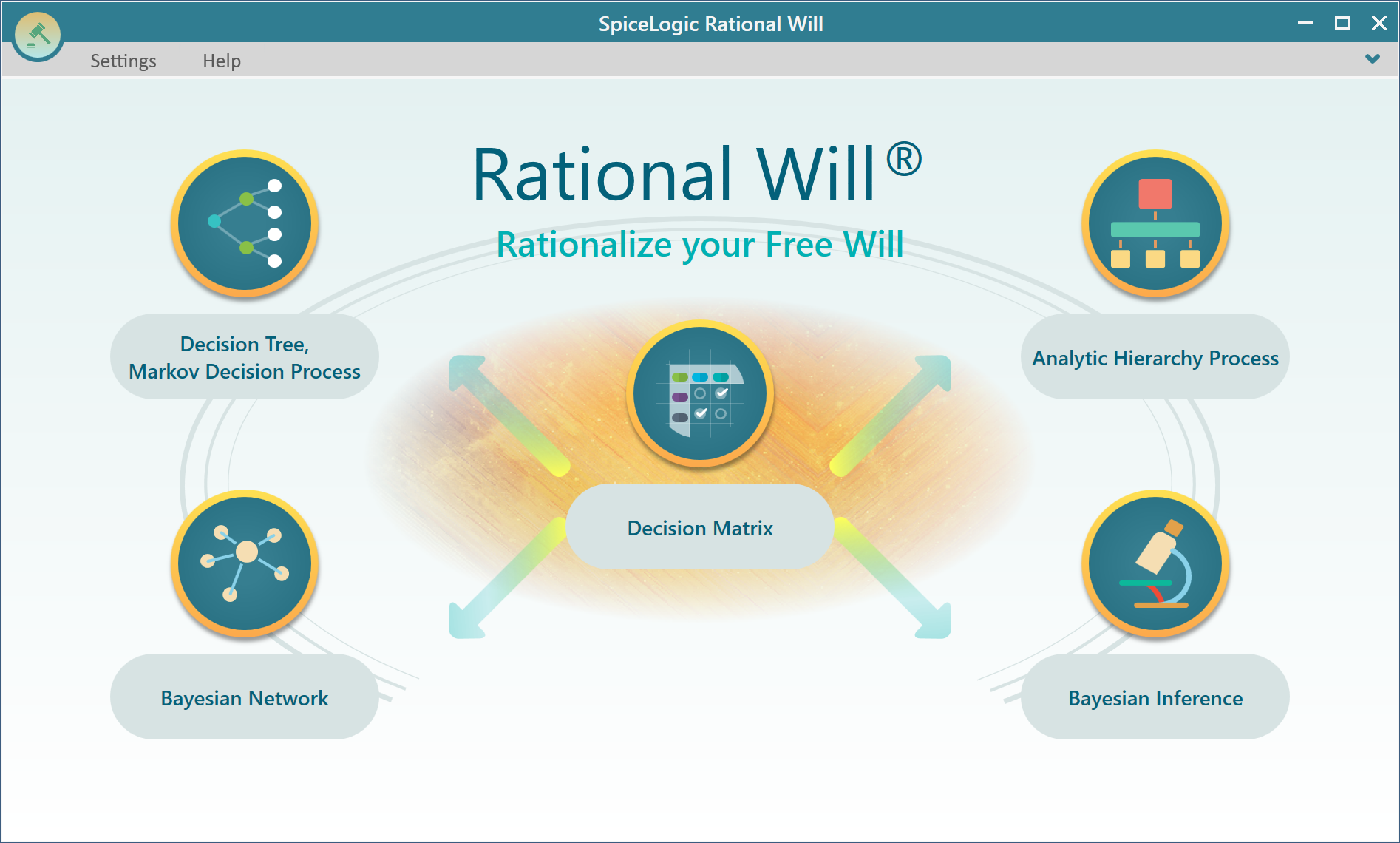
Rational Will comes with several decision modeling tools. Each one has its own set of documentation pages, so you can read up on whichever fits your problem. Here are the tools:
- Decision Tree
- Analytic Hierarchy Process
- Markov Decision Process
- Cost-Effectiveness Analysis
- Bayesian Network
- Bayesian Inference (Diachronic Interpretation)
- Decision Matrix
A quick word on which tool to reach for. If you are weighing one choice against a few options across several things you care about, the Analytic Hierarchy Process or the Decision Matrix is a good fit. Picking a laptop or a contractor is that kind of problem. If your decision involves chance and a chain of events, reach for the Decision Tree. Should you launch the product now or wait and test it first? That is a decision tree problem. Each documentation page above walks you through its own tool, step by step.
Many of our programs, bundled into one
You may have noticed that we also sell some of these as stand-alone programs, like Decision Tree Analyzer, Analytic Hierarchy Process, and Bayesian Network Software. With Rational Will, you get all of them together in one program. That makes for a simpler, smoother experience. You learn one interface and have every tool at hand.
Finally
If you are taking a Decision Analysis course, you will find Rational Will a real help for learning the ideas hands on. It covers Normative Decision Theory, Utility functions from Behavioral Economics, Sensitivity Analysis, Monte Carlo Simulation, Stochastic Dominance, Multi-criteria decision analysis, and a lot more. It also includes Markov Chain and Markov Decision Process modeling, plus Cost-Effectiveness Analysis, which is especially handy for healthcare students. The interface is clean and modern, so it is just as easy to pull up for everyday decisions in your own life. Pick what to study, where to live, which offer to take. Make better decisions, and stop second-guessing yourself.