

Decision Policy
Policy Visualization in a Decision Tree
When you solve a decision tree, you do not just want a number at the end. You want to know what to actually do. A policy answers that. It tells you which action is best at each point, based on what you know at that moment.
The SpiceLogic Decision Tree software works this out for you. Once you have built your tree and set the payoff values on the right nodes, it reads your chosen decision criterion and finds the best path through the tree. Then it marks that path so you can see it at a glance. The edges along the recommended strategy are drawn in green, as shown below.
Think of it like driving directions. The software has looked at every route and highlighted the one that gives you the best result. You can follow the green line from the start of the tree and see which choice it suggests at each decision point. Say you are deciding whether to launch a product now or run one more test first. The green path might tell you to test first, then launch only if the test comes back positive. You read it straight off the tree.
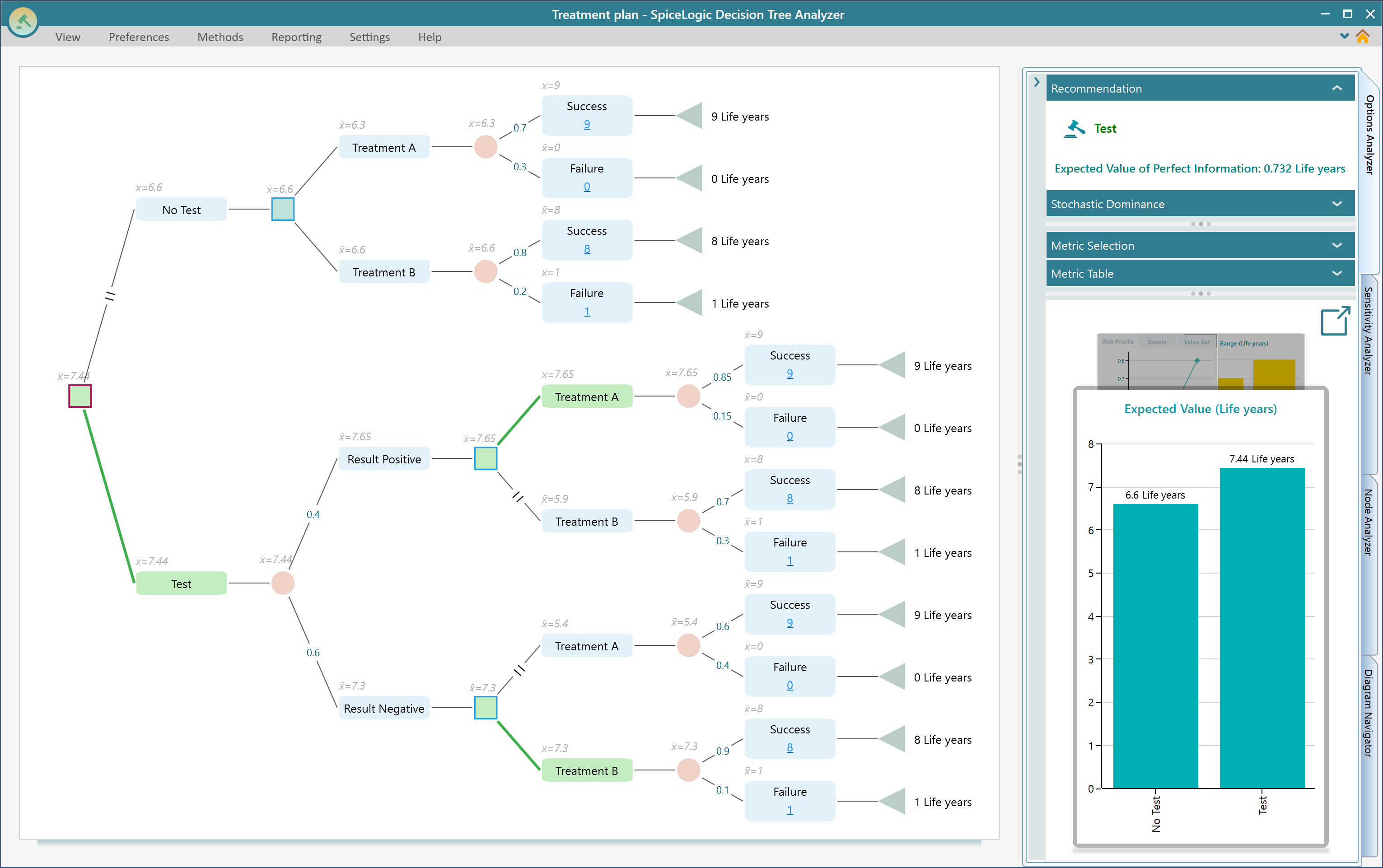
The action nodes that sit along the best paths turn green too, as you can see in the screenshot above. So both the edges and the nodes light up. That makes the recommended strategy easy to find even in a big tree.
This matters most when your tree branches a lot. After an uncertain event turns out one way or another, the best next action can change. The green coloring shows you the right move for each of those situations, not just one overall answer. For example, if a market test comes back weak, the best move might be to stop, while a strong result points you toward a full launch. Both moves show up in green, each on its own branch.
Viewing the Rule Set
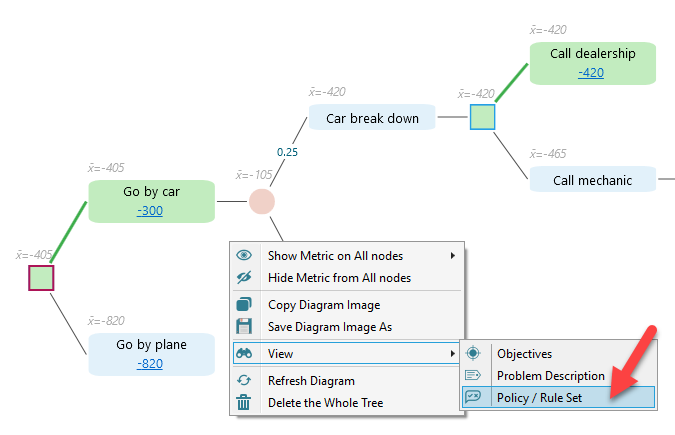
Sometimes the colored tree is not enough. You may want the policy written out as plain rules you can read, share, or hand to the person who has to carry out the decision. The software can list that for you. Right click on the diagram to open its menu, then pick the option to view the rule set, as shown below.
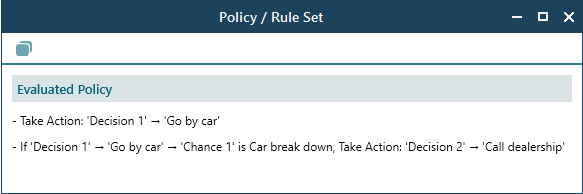
Once you click that option, the Policy Window opens, as shown below. It lays out the policy as a set of clear rules. Each rule describes a situation and the action you should take in it. The result reads almost like a short instruction sheet: in this case, do this; in that case, do that. For instance, a rule might read like "if the trial result is positive, go ahead with the full launch."
This is handy when you need to explain or defend a decision. Instead of asking someone to trace the whole tree, you can show them the rules and let the reasoning speak for itself. It is also easy to paste into an email or a report when someone asks how you reached the call.
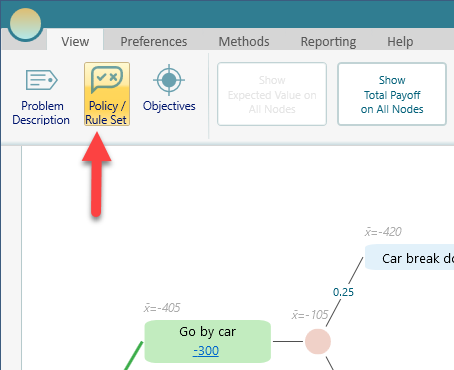
You can also open this same window from the View menu on the Ribbon. So you have two easy ways to reach it: the right click menu on the diagram, or the View menu at the top. Use whichever is closer to hand while you work.